
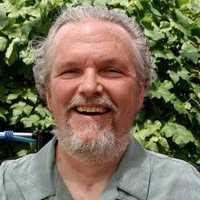
By David W. Oaks
Within moments of walking into my first psychiatric institution ward as a troubled young man, I felt a powerful sense of authoritarianism. Sure enough, as soon as I got into my room, I felt bullied to take a cup of liquid psychiatric drugs. The mental health worker offered the cup, saying, “Take this medication.” He repeated that phrase over and over.
Finally, drawing upon my 21-year-old rebellious spirit, I said, “Sure, you want me to take that? I agree: Yes.” He was relieved and handed me the cup, which I took.
I then poured the liquid on the floor and said, “There, I have taken your medication.” Very quickly, I discovered that my sense of humor was not shared. A group of mental health workers brought me down the hall and put me in what they called the Quiet Room, that is solitary confinement. The room was about ten feet by ten feet, with only a bare mattress on the floor. There I was held down by the group and they pulled down my pants and injected the drugs into my butt.
I spent a few days in there, and I will always remember looking out the window which was covered by an impenetrable metal screen. I recall punching that steel screen and promising to myself, “When I get out of here, I am going to do some major damage to this system!”
That was about 50 years ago. The trauma of this bullying has been a source of negativity for me in so many ways. Thankfully, despite five psychiatric institutionalizations that were all traumatizing in similar ways, I got in touch with one of the first activist psychiatric survivor groups in this era. So my trauma has a silver lining: I have been in touch with thousands of amazing, strong, resilient, creative human beings during my 50 years as a Mad community organizer.
Today in the mental health field we often hear the phrase “lived experience.” But I need to ask, “Lived experience of what?” Yes, I experienced what is called “psychosis.” Yes, I experienced the mental health system. But I also experienced human rights abuse in that mental health system.
This personal experience of abuse by people who were entrusted to care for my vulnerable mental and emotional state, led to complex challenges. After all, if you need a particular type of help, who do you turn to if your helpers have been so dangerous?
However, I have also had the personal experience of finding alternative choices that supported my well-being. I found mental and emotional recovery through family, peer support, advocacy, nutrition, exercise, counseling, wilderness, protest, spirituality, meditation, employment, avoiding drugs, and more.
In my work as a mad activist, I have learned about many models of resilience, recovery and healing for those of us considered “psychotic.”
I have been gratified to find out there is plenty of evidence and data for the effectiveness of these approaches. For the next generation, it appears that scaling up and making these models widely available for all will be the main challenge.
Given the crises we are all living in – environmental & inequality, for example – the lessons we psychiatric survivors have learned through our personal experience in mental health, would seem to potentially apply to all of humanity.